“White House Blues” is a song about the shooting of President William McKinley by the anarchist Leon Czolgosz at the Pan-American Exposition in Buffalo, New York, in September 1901; McKinley died of his wounds. Charlie Poole and the North Carolina Ramblers first put it on record, on 20 September 1926 for Columbia, with the assassin named “Zolgotz” in the first verse. Harry Smith placed that recording on his Anthology of American Folk Music, issued by Folkways in 1952, where it runs 3:31. Other string bands recorded the story under different titles over the next few years, among them Ernest Stoneman in 1927 as “The Road to Washington” and Riley Puckett in 1929 as “McKinley.”
The verses tell the story in short, jumping scenes: the doctor who cannot find the bullet, a ride to outrun the train, the president dying, the assassin seized by his wife and carried to Washington, and finally Theodore Roosevelt in the White House while McKinley rests in the graveyard.
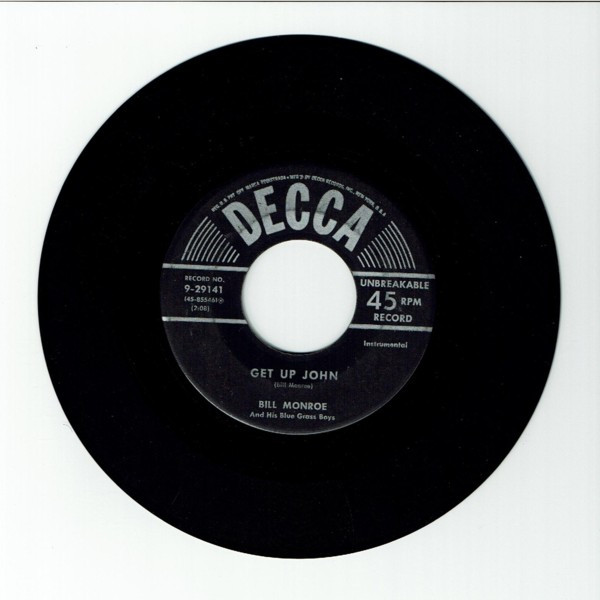
The folklorist Neil Rosenberg noted that, although the song had been collected from oral tradition only once, commercial records documented it far more fully, and that Bill Monroe recorded it after the Anthology appeared. Monroe’s session was on 7 January 1954, possibly at the Bradley Studio in Nashville, with Jimmy Martin on guitar, Rudy Lyle on banjo, Charlie Cline on fiddle and Ernie Newton on bass; the song is credited there to Wilbur Jones. From old-time string-band repertory the song passed into bluegrass, and Monroe performed it often at his park in Brown County, Indiana.