Chapter 4: Bluegrass Finds Itself
In late January 1975, in a small commercial studio in Silver Spring, Maryland, J.D. Crowe and four sidemen sat down to record an album. Crowe was thirty-eight. He had been bandleader of the New South for almost four years and house-band leader at the Lexington Holiday Inn for almost seven. The four musicians with him were younger. Tony Rice, the guitarist, was twenty-three. Ricky Skaggs, the mandolinist and tenor singer, was twenty. Jerry Douglas, the dobro player, was eighteen. Bobby Slone, the bassist, was the oldest of the sidemen at forty-eight.
The album they were about to record had no fixed title yet. They would call it, simply, J.D. Crowe and the New South. It would be released that summer as the forty-fourth catalog entry of a small independent label out of Massachusetts called Rounder Records. The cover would be plain white with a black-and-white photograph of the band. Within five years, every serious bluegrass musician under thirty would own a copy and most could play every track from memory. Within twenty years, it would be in the Library of Congress’s National Recording Registry. Within forty years, it would still be called, with no apparent need for elaboration, the white album.

What the white album captured was a band at one of its peaks — and a band about to fall apart. Within months of the recording, Skaggs would leave. So would Rice. So would Douglas. The lineup that produced the most influential bluegrass record of the decade existed for the better part of one calendar year. Crowe kept going with new sidemen; the New South would last another fifteen years in various configurations. But what made the white album the white album was a moment that did not repeat.
This is the chapter about what happened to the musicians who walked out of Track Studio in February 1975 and to the music they walked away from. Tony Rice went to California to join David Grisman’s new acoustic quintet. Ricky Skaggs went briefly to the Country Gentlemen and then to Emmylou Harris’s Hot Band, where he would spend the next four years carrying bluegrass instrumental sound into mainstream country. Jerry Douglas went on the road as a session player and would, within fifteen years, become the most-recorded dobro player in the world. They were not the only musicians of their generation walking out of their old bands and into new ones in 1975 and 1976. Across the country — in Bowling Green, Kentucky; in Bethesda, Maryland; in Boulder, Colorado; in the San Francisco Bay Area — a second generation of bluegrass musicians, the first generation to grow up with the founding records as their formative listening, was building bands that did not sound like the bands their teachers had played in.
The argument the music’s last chapter had set up — between progressive bluegrass and traditional bluegrass — became, in the decade between roughly 1975 and 1985, the central organizing fact of the genre. But the more interesting fact, and the one this chapter wants to surface, is that the same musicians were arguing on both sides. Tony Rice played the most virtuosic experimental acoustic music of the era with David Grisman’s quintet and the most deliberately traditional bluegrass of the era with the Bluegrass Album Band. Sam Bush led the New Grass Revival, the band that gave a name to progressive bluegrass, and also played reverentially on Doyle Lawson’s gospel records. Ricky Skaggs became a country star and came back to bluegrass two decades later having never really left. The argument was less a war between two camps than a process by which a single body of musicians worked out what their music could be. The music asked, for the first time in its history, what it actually was. And it answered: more than one thing.
Rounder 0044 and the breakup of the New South
The white album was recorded across two sessions in January 1975. The repertoire was an eclectic mix that announced its own ambitions immediately: Ian Tyson’s “Summer Wages,” Gordon Lightfoot’s “Ten Degrees and Getting Colder,” Utah Phillips’s “Rock Salt and Nails,” Flatt and Scruggs’s “Cryin’ Holy Unto the Lord,” the traditional “Sally Goodin,” and an instrumental of Crowe’s titled “I’m Walking.” Crowe’s banjo had become, over the seven years at the Holiday Inn, one of the most precise and articulate instruments in the music. Rice’s flatpicked guitar — played on a 1935 Martin D-28 herringbone that had once belonged to Clarence White — set the new standard for what the instrument could do in a bluegrass band. The lineage was direct: Doc Watson’s Folkways recordings in the early 1960s had established the vocabulary, treating the flatpicked guitar as a melody-bearing voice rather than a rhythm instrument; Clarence White had carried Watson’s approach into the Kentucky Colonels and from there into the Byrds’ bluegrass-and-rock experiments; and Rice, with Clarence’s herringbone in his hands after White’s 1973 death in a car accident, built the next chapter. Skaggs’s tenor singing and mandolin playing were the work of a twenty-year-old who had been performing professionally since he was sixteen and who had already absorbed three full generations of bluegrass tradition. Jerry Douglas’s dobro was the instrument’s first serious modern voice; he was just out of high school.
The album sold, by bluegrass standards of the era, briskly. It sold for the next forty years. It did not change anyone’s mind about what bluegrass was — Crowe, Rice, Skaggs, Douglas, and Slone were not making a manifesto — but it changed every aspirational bluegrass band’s standards for what bluegrass could sound like. Tightness, precision, harmonic clarity, repertoire breadth, instrumental virtuosity in service of arrangement rather than show: these were the album’s lessons. Every bluegrass band of the next forty years would be measured against it.
Within months of the album’s release, the band had effectively dissolved. Skaggs left to join the Country Gentlemen for a few months. Tony Rice was approached by David Grisman about a new band Grisman was assembling in California. Jerry Douglas was offered session work he could not turn down. By the end of 1975, only Crowe and Slone remained of the original lineup. The album that defined the next generation of bluegrass had been recorded by a band that did not survive its own recording.
Tony Rice and the David Grisman Quintet
Before Grisman’s quintet, there had been another band that hinted at where post-bluegrass acoustic music might go. In 1973, Jerry Garcia — the Grateful Dead’s guitarist, who had been a serious bluegrass kid in the early 1960s, playing in the Black Mountain Boys with David Nelson and traveling to Bean Blossom in 1964 hoping to audition for Bill Monroe (by the standard account he was too shy to approach Monroe in person and left without trying) — convened a side project he called Old and In the Way. The lineup was Garcia on banjo, Peter Rowan (recently out of Monroe’s band) on guitar and lead vocals, Vassar Clements on fiddle, John Kahn on bass, and, after Richard Greene’s brief tenure, David Grisman on mandolin. They played a handful of West Coast dates through 1973 and 1974. On October 8, 1973, they recorded a live set at the Boarding House in San Francisco; the resulting album, Old & In the Way, was released on Garcia’s own Round Records in April 1975. It went on to become, for a long stretch of the next two decades, the best-selling bluegrass album in history. For the millions of Deadheads who would never have bought a Bill Monroe LP, Old & In the Way was the door into bluegrass. For Grisman, the band was the rehearsal for the chamber-acoustic music he would spend the next forty years building.
A different kind of acoustic-music experiment had been going on, parallel to Old and In the Way, since 1971. John Hartford — a Missouri-born songwriter who had written Glen Campbell’s “Gentle on My Mind” in 1967 and had spent the late 1960s as a major Nashville country-music songwriting presence — released Aereo-Plain on Warner Bros. in May 1971. The album, recorded with Norman Blake on guitar, Tut Taylor on dobro, Vassar Clements on fiddle, and Randy Scruggs on bass, was an acoustic instrumental-and-vocal record that drew on bluegrass instrumentation but moved sideways into singer-songwriter and counterculture territory. Hartford had let his hair grow out, taken to wearing a nineteenth-century riverboat captain’s hat, and was, at thirty-four, in the middle of a quiet creative reinvention. Aereo-Plain sold modestly. Sam Bush has said repeatedly, in interviews across the next forty years, that the New Grass Revival’s existence is, in some structural sense, a response to it.
Norman Blake, who had played guitar on Aereo-Plain, would release his own first solo album, Home in Sulphur Springs, on Rounder in 1972. He followed it with Back Home in Sulphur Springs (1975), Whiskey Before Breakfast (1976, with Charlie Collins), and a long career of acoustic-music records into the 2010s. Blake’s flatpicked guitar — spare, lyrical, drawing on Carter Family parlor music and 1920s old-time as much as on bluegrass — would become, alongside Tony Rice’s, one of the two foundational influences on the post-1970s bluegrass guitar vocabulary. Of the two, Blake was the one Tony Rice was most likely to listen to.
David Grisman, by 1975, was twenty-nine years old and had been working as a professional musician in Greenwich Village, the Boston folk scene, and the West Coast acoustic underground for the better part of a decade. He had played with Red Allen and the Kentuckians; he had formed Earth Opera with Peter Rowan; he had recorded sideman work for a long list of folk and rock acts. By 1975, working out of Mill Valley, California, he had begun assembling a new acoustic-instrumental quintet. The plan was not exactly a bluegrass band — none of the instrumentation was electric, but the music Grisman wanted to play was a hybrid he had been working out in his head for years, drawing on Bill Monroe’s mandolin chop, Django Reinhardt’s gypsy-jazz swing, Stéphane Grappelli’s violin lyricism, the Latin rhythms of Brazilian choro, and the chamber forms of classical-music ensemble writing.
The lineup he assembled in 1975 was Grisman on mandolin, Tony Rice on guitar, Darol Anger on violin, Todd Phillips on second mandolin, and Bill Amatneek on bass. They began playing weekly in the San Francisco Bay Area. In 1977 they recorded a self-titled album for the small Kaleidoscope label. The opening track was a Grisman composition called “E.M.D.” — short for Em-Major-D, the three chords the tune cycled through. The album sold modestly, won an obsessive cult audience, and gave the music a name. Grisman’s nickname was Dawg; he called the music dawg music. Within a decade, every progressive-acoustic musician in the country would have absorbed the David Grisman Quintet’s first three or four albums.

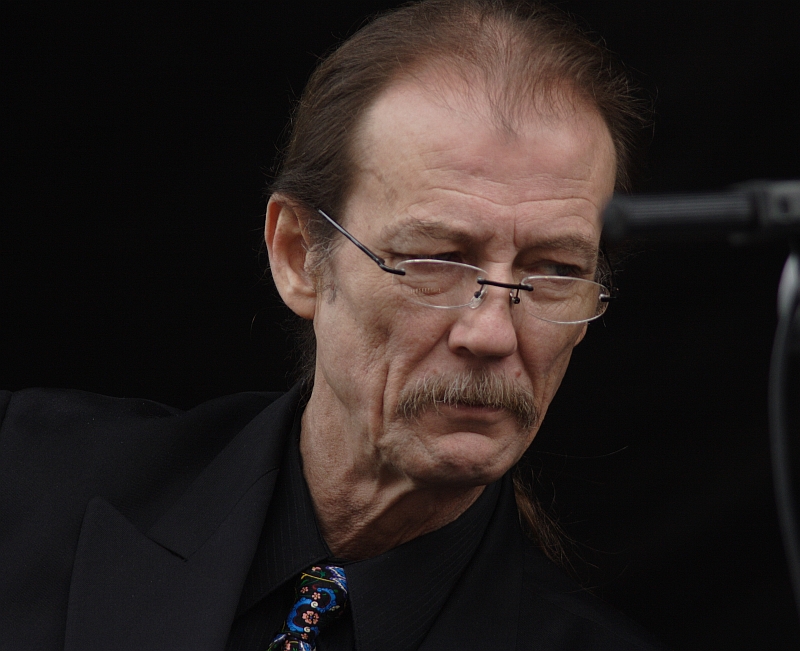
For Tony Rice the Quintet was the bridge between his New South sideman years and his own emergence as a bandleader. He stayed with Grisman through 1979 and absorbed, during those three years, the full vocabulary of post-bluegrass acoustic music. When he left, he brought it with him. His 1979 album Manzanita, recorded for Rounder with J.D. Crowe, Ricky Skaggs, Sam Bush, and Jerry Douglas, is half traditional bluegrass and half Grisman-influenced acoustic chamber music. The Tony Rice Unit, his own band of the early and mid-1980s, would take the chamber-music direction further. By 1983, with the album Mar West, Rice was playing instrumental acoustic music that no previous bluegrass guitarist had attempted. He was also, simultaneously, recording the Bluegrass Album Band records with J.D. Crowe and Doyle Lawson, playing some of the most deliberately traditional bluegrass of the era. The same musician was on both sides of the chapter’s argument, and the same instrument — that 1935 Martin D-28 — produced both sounds.
The New Grass Revival evolves
Six hundred miles east, in Bowling Green, Kentucky, the New Grass Revival had spent the early 1970s touring punishingly hard. The four original members — Sam Bush on mandolin, Curtis Burch on guitar and dobro, Courtney Johnson on banjo, and Ebo Walker on bass — released their 1972 Starday debut and then spent a year and a half opening for Leon Russell on a national tour. Russell was a rock star at the peak of his commercial moment; the New Grass Revival opened his sets, then sat in on his sets, then closed his sets. The audience was enormous and was, in most cities, hearing bluegrass instruments played in front of a rock-and-roll crowd for the first time. The exposure was unprecedented. The strain on the band was substantial.
Ebo Walker left in 1973. After a brief tenure by Butch Robins, the band recruited a Bowling Green singer-bassist named John Cowan, who joined in 1974. Cowan’s voice — a soaring rock-and-blues-tinged tenor that pushed past the conventional bluegrass register — became the band’s new defining feature. The Bush-Burch-Johnson-Cowan lineup ran from 1974 through 1981 and produced a string of albums on Flying Fish that established the New Grass Revival as the most committed progressive band in bluegrass.
In 1981, after seven years of touring, Curtis Burch and Courtney Johnson left. They had had enough of the road. Bush and Cowan kept the band going by recruiting two players who would change its center of gravity entirely. Pat Flynn, a Nashville-area guitarist with a more pop-and-rock-inflected harmonic sensibility, replaced Burch. Béla Fleck, a twenty-three-year-old banjo player from New York City — raised in Manhattan, self-taught on the banjo with later lessons from Tony Trischka and Erik Darling, and a recent veteran of Tasty Licks — replaced Johnson. The Bush-Cowan-Flynn-Fleck lineup is the canonical late-period New Grass Revival, and it is the band on which Fleck’s banjo playing — already considered virtuosic before he joined NGR — became the model for what the banjo could do in a jazz-fusion-adjacent acoustic context.

The Bush-Cowan-Flynn-Fleck NGR recorded for Sugar Hill from 1981 through 1986, then signed with EMI/Capitol for what became their commercial peak — New Grass Revival (1986), Hold to a Dream (1987), Friday Night in America (1989). They played the festival circuit nationwide, played country radio, picked up Grammy nominations, and toured as opening act for Garth Brooks on his early-1990s arena tours. They played their last show on New Year’s Eve 1989. The band that had named the era did not survive it.
The Seldom Scene’s classic decade
In Bethesda, Maryland, the Seldom Scene’s Tuesday-and-Thursday-night residency at the Red Fox Inn had become, by the mid-1970s, the most important regular bluegrass gig in the country. The band cycled through a sequence of remarkable albums on Rebel Records: Act 1 (1972), Act 2 (1973), Act 3 (1974), Old Train (1973), and the live Live at the Cellar Door (1975), which is by general agreement one of the great live bluegrass albums ever recorded. The five members — John Duffey on mandolin and high tenor, Mike Auldridge on dobro, Ben Eldridge on banjo, Tom Gray on bass, and John Starling on guitar and lead vocals — had become, almost without trying, the most influential progressive bluegrass band on the East Coast.
What set the Seldom Scene apart from the New Grass Revival was elegance. Where NGR pushed virtuosity and rhythmic energy, the Seldom Scene worked the harmonic and textural angles. Auldridge’s dobro replaced what would normally have been a fiddle, giving the band a softer, more lyrical instrumental front line. Duffey’s vocal arrangements, drawing on his years with the Country Gentlemen, were among the most carefully voiced in the music. The repertoire — Bob Dylan, Jimmy Driftwood, the Stanley Brothers, traditional ballads, sentimental nineteenth-century parlor songs — leaned more bookish and more harmonically subtle than the louder progressive acts.
John Starling, who had a day job as an Army doctor, left in 1977 to focus on his medical practice; he was replaced by the singer-guitarist Phil Rosenthal, who would lead the band’s lead-vocal work through the next decade. The Rosenthal-era Seldom Scene leaned further toward singer-songwriter material — a turn that some fans preferred and others did not — but the instrumental sound and Duffey’s vocal arrangements held the band together. The Birchmere residency, which the band had moved into when the Red Fox closed in 1977, would last until well into the 2010s.
Hot Rize and the Colorado sound
In the fall of 1978, in Boulder, Colorado, four musicians formed a band they would name after a fictional radio-advertised flour product from a 1940s old-time medicine show. Tim O’Brien was the mandolinist and lead singer; Charles Sawtelle played guitar; Pete Wernick — already nationally known as a banjoist and the author of the Bluegrass Banjo instructional book that had taught a generation of players — was the banjoist; Nick Forster was the bassist. They called themselves Hot Rize and they began touring almost immediately.
What made Hot Rize distinctive, beyond the strength of their original songwriting (especially O’Brien’s), was a comic stage element nobody else in bluegrass had attempted. Midway through each show the four musicians would leave the stage and re-emerge in 1950s country-and-western costume — pearl-snap shirts, Stetsons, fake mustaches — and perform as a parody honky-tonk band called Red Knuckles and the Trailblazers. Wernick’s character was “Slade,” Forster’s was “Wendell,” Sawtelle’s was “Swade,” and O’Brien’s was “Red.” They played the same set every night, in character, with deliberately dated arrangements and earnestly hammy stage patter. The audience loved it. Hot Rize would record both as themselves and as the Trailblazers, and the alter-ego band’s records remain in print decades later as cult objects.
Hot Rize’s larger contribution was geographical and cultural. They were the first major bluegrass band to base themselves in the Rocky Mountain West. They anchored the Telluride Bluegrass Festival from its early years and made Colorado, by the mid-1980s, a real regional bluegrass scene. They were Grammy-nominated multiple times. They held together as a full-time touring band through 1990, when Tim O’Brien left to pursue a solo career; the band continued in periodic-reunion form for the next decade. Charles Sawtelle died of leukemia on March 20, 1999, at fifty-two. The band would eventually reform in 2002 with Bryan Sutton replacing Sawtelle.
The counter-tradition: Doyle Lawson and the Bluegrass Album Band
For every band working a progressive direction in the late 1970s and early 1980s, an equal and reactive impulse formed against it. Doyle Lawson, who had been the second-generation Country Gentlemen mandolinist from 1971 through 1979, left the Gentlemen at the end of 1979 to form his own band. He called it Quicksilver, and he assembled it specifically to play hard, tight, mountain-rooted bluegrass with a heavy gospel emphasis. The original lineup — Lawson on mandolin and lead-and-tenor vocals, Jimmy Haley on guitar and tenor, Lou Reid on bass, and Terry Baucom on banjo — recorded Doyle Lawson and Quicksilver for Sugar Hill in 1979 and Rock My Soul in 1981. The gospel quartets on those records — Lawson’s voicing of the traditional Southern gospel four-part stack — became the genre’s modern template. Every bluegrass gospel quartet of the next thirty years would be measured against Lawson’s arrangements.
A parallel project formed in September 1980. Tony Rice and J.D. Crowe had been talking, separately, about wanting to record a record of pure traditional bluegrass — Bill Monroe songs, Flatt and Scruggs songs, Stanley Brothers songs, Reno and Smiley songs — played by virtuoso musicians without any of the progressive ambitions their main bands were pursuing. They booked a Cincinnati studio for three days, September 22 through 24, 1980. They invited Doyle Lawson on mandolin, Bobby Hicks (a longtime Bill Monroe fiddler) on fiddle, and Todd Phillips on bass. They recorded what would be released the next year as The Bluegrass Album, by an entity they called the Bluegrass Album Band.
The album sold immediately and unexpectedly well. Over the next fifteen years, the Bluegrass Album Band — never a touring band, always a periodic recording project — would release six volumes of Bluegrass Album records on Rounder. The repertoire was deliberately conservative; the playing was unmistakably modern. Crowe and Rice and Lawson were the same musicians the progressive scene depended on, and they were playing material that the progressive scene’s audience would have rolled its eyes at. That was exactly the project. The Bluegrass Album Band was the argument’s clearest single demonstration. The musicians on the progressive side of the divide had built the canonical traditional record of the era. The music had become large enough to contain both impulses inside the same set of fingers.
Hazel Dickens solo, and the women’s voices that followed
Hazel Dickens, by the mid-1970s, had moved out from under the shared billing with Alice Gerrard and was building a solo career on Rounder Records. Hard Hitting Songs for Hard Hit People came out in 1980; By the Sweat of My Brow in 1983; It’s Hard to Tell the Singer from the Song in 1987. The records collected Hazel’s increasingly powerful original songwriting alongside her traditional repertoire. The songs from this period that have entered the standards — “Black Lung” (about her brother Thurman’s death from black-lung disease), “Working Girl Blues,” “Mama’s Hand,” “Don’t Put Her Down (You Helped Put Her There),” “It’s Hard to Tell the Singer from the Song” — moved labor consciousness, women’s working lives, and explicit feminism into a music that had previously kept its political content under a Sunday hat.
Hazel’s most consequential single appearance during this period was not on her own records. In 1976, the filmmaker Barbara Kopple released Harlan County, U.S.A., a documentary about a coal-miners’ strike at the Eastover Mining Company’s Brookside Mine in Kentucky. The film won the Academy Award for Best Documentary Feature in 1977. Hazel Dickens sang several songs on the soundtrack, including “Black Lung.” For a film audience much larger than bluegrass had ever reached on its own terms, Hazel’s voice became the sound of the American labor movement.
What Hazel set in motion in this decade was a lineage. The line of women bluegrass musicians who would follow her — Laurie Lewis (whose first solo records came in the early 1980s), Lynn Morris (who formed the Lynn Morris Band in 1988), Dale Ann Bradley, Claire Lynch, eventually Rhonda Vincent and Sierra Hull and Molly Tuttle — was at no point an unbroken matriarchy in the way bluegrass had been an unbroken patriarchy. But it became, for the first time, a line. Hazel’s solo work was the trunk; her songs were the branches; her example as a working bluegrass musician outside the family-band structure was the root.
Ricky Skaggs goes country, and brings the instruments with him
Among the second-generation musicians who walked out of the New South in 1975, Ricky Skaggs took the longest detour. After the brief Country Gentlemen tenure, he formed a band called Boone Creek with Jerry Douglas. Boone Creek recorded one Sugar Hill album in 1977 before dissolving. Skaggs then took a job that defined his next phase: he joined Emmylou Harris’s Hot Band as a vocal arranger and mandolinist, beginning in late 1977.
Harris, by 1977, was one of the most influential figures in country-rock. Her Hot Band was a workshop for some of the best musicians in any genre. During his three years with Harris, Skaggs voiced the harmony arrangements on Blue Kentucky Girl (1979), Roses in the Snow (1980), and Light of the Stable (1979). Roses in the Snow was a particularly important record: Harris’s deliberate move toward bluegrass-and-acoustic-country material, with Skaggs’s harmony arrangements at its center. The album sold strongly and demonstrated that the bluegrass instrumental palette could land on country radio.
In 1981, Skaggs left Harris’s band to begin a solo career. His first solo album, Sweet Temptation, came out on Sugar Hill that year. Almost immediately afterward he signed with Epic Records and released Waitin’ for the Sun to Shine, his country-music breakout. The single “Crying My Heart Out Over You,” a cover of a 1960 Flatt and Scruggs song, hit number one on the country chart in 1982. Skaggs’s band on those records was a bluegrass band wearing a country-radio costume: acoustic mandolin, fiddle, dobro, occasional electric guitar and steel. He won the Country Music Association’s Entertainer of the Year award in 1985. For the rest of the decade he carried bluegrass instrumental sound into mainstream country radio — a parallel argument to the newgrass one, made not by changing what bluegrass sounded like but by smuggling its instruments into another genre’s hit records.
Traditional continuation, Alison Krauss at the edge, and the IBMA
While the second generation was pushing the music outward, the founding generation was still touring and recording. Bill Monroe was sixty-five years old in 1976. He had been a working bandleader for forty-one years. He toured constantly through the late 1970s and 1980s. His 1981 album Master of Bluegrass on Decca was one of his strongest late-career records. He continued to run the Bean Blossom festival every June. He continued, at festivals through this entire period, to play hard mountain-modal bluegrass with whatever lineup of Blue Grass Boys he had assembled that year — Kenny Baker on fiddle for much of the period, an evolving cast on the other instruments.
Jimmy Martin was still on Decca through the 1970s. His “King of Bluegrass” persona had deepened into something close to performance art — onstage banter, drinking jokes, the unsuccessful Opry-membership campaign continuing year after year. He recorded sporadically. He was still the most demanding bandleader in the music; the long line of young banjo players who passed through the Sunny Mountain Boys after J.D. Crowe — Bill Emerson, Vic Jordan, Alan Munde — all left Martin’s band better players than they had arrived.
Larry Sparks’s Lonesome Ramblers, formed at the end of his Ralph Stanley tenure in 1969, recorded through the entire decade for Rebel and Old Homestead Records and held a hard-traditional position throughout. Ralph Stanley continued with the Clinch Mountain Boys through the Roy Lee Centers era; Centers was murdered in May 1974, and Ralph filled the lead-vocal slot with a series of subsequent apprentices — Charlie Sizemore, Junior Blankenship, eventually his own son Ralph Stanley II. Curly Ray Cline stayed on fiddle through the entire period.
A new traditional band formed in southwest Virginia in 1983. Tim Austin assembled the Lonesome River Band in Floyd County and built it deliberately around the hard, fast, mountain-modal sound that Ralph Stanley had been holding. The Lonesome River Band’s roster over the next two decades would pass Dan Tyminski, Ronnie Bowman, Don Rigsby, and the long-tenured banjoist Sammy Shelor through its ranks. By the late 1980s LRB was the most consistently traditional contemporary band in the music — Doyle Lawson’s main competitor for the hard-bluegrass title.
At the very edge of the chapter, a fourteen-year-old fiddler from Decatur, Illinois named Alison Krauss was preparing her first record. Krauss had been classically trained as a violinist and had switched to bluegrass fiddle at age eight. By the age of thirteen she had won the Walnut Valley Festival Fiddle Championship in Winfield, Kansas. The Society for the Preservation of Bluegrass Music in America named her the Most Promising Fiddler in the Midwest the same year. She signed with Rounder Records at fourteen and recorded Too Late to Cry in 1986 with backing musicians who included Jerry Douglas, Sam Bush, and Stuart Duncan. The album was released in 1987. Krauss was sixteen. Within a decade she would be one of the most commercially successful bluegrass artists of all time and the genre’s most-recognized woman bandleader since Hazel Dickens. The chapter does not really catch her — she belongs to the next chapter, and the one after that, and the one after that. But her arrival at the edge of the period is the right place to leave the music’s argument: with a teenaged fiddler in Illinois preparing the first of many records that would, eventually, demonstrate that the question of bluegrass-versus-not-bluegrass was the wrong question to be asking.
The institutional moment that finally crystallized the music’s self-conscious identity arrived in 1985, in Owensboro, Kentucky. A group of industry figures led by Pete Kuykendall of Bluegrass Unlimited, Sonny Osborne, and a handful of others founded the International Bluegrass Music Association. The IBMA’s purpose was straightforward: bluegrass needed the kind of trade-association infrastructure that country music had had since the Country Music Association formed in 1958. It needed an annual industry conference, an awards ceremony, a hall of fame, a magazine, and an advocacy presence in Nashville and Washington. By 1987 the IBMA was running its first World of Bluegrass conference. By 1991 it had established the Bluegrass Music Hall of Fame. The Owensboro headquarters would later move to Nashville, then to Raleigh, and as of 2024 to Chattanooga.
What the IBMA represented, more than any single institutional function, was the music’s formal acknowledgment that it was now an industry — a coherent professional category with internal definitions, awards, and self-conscious history. For most of the 1950s and 1960s the genre had not even agreed on what to call itself; by 1985 it had a trade association. The argument had, in the institutional sense, been resolved. The IBMA included progressive bands and traditional bands alike. It included gospel acts and country crossovers. It awarded the same trophies to Doyle Lawson and to the New Grass Revival.
Between 1972 and 1985 the music had spent thirteen years asking what it was supposed to be. The IBMA’s founding was the institutional answer: it was a music large enough to include everything that had been argued about. The argument did not end. It just stopped being a question of whether bluegrass would survive its own internal disagreements. By 1985 the disagreements were the genre’s working state.
The chapter ends in the IBMA’s first year, with a fourteen-year-old fiddler in Illinois recording her first album, Bill Monroe touring his forty-sixth year as a bandleader, Tony Rice playing a Grisman Quintet set in California and a Bluegrass Album Band session in North Carolina in the same week, Hazel Dickens singing labor songs in union halls, and Ricky Skaggs on top of the country charts with a Flatt and Scruggs cover. None of those musicians thought of themselves as occupying the same scene. They were all the same music.
Sources and further reading
- Neil V. Rosenberg, Bluegrass: A History (University of Illinois Press, 1985; rev. 2005). The standing scholarly history; covers the early part of this chapter directly.
- Tim Stafford and Caroline Wright, Still Inside: The Tony Rice Story (Word of Mouth Press, 2010). The authoritative Rice biography.
- Murphy Hicks Henry, Pretty Good for a Girl: Women in Bluegrass (University of Illinois Press, 2013). For Hazel Dickens, Alice Gerrard, Alison Krauss, and the women’s-voices lineage.
- The Bluegrass Music Hall of Fame & Museum for inductee biographies.
- The Library of Congress National Recording Registry essay on Rounder 0044.
- Bluegrass Unlimited archives for the period’s working journalism.
- The International Bluegrass Music Association for institutional history from 1985 onward.