Mining Songs, Black Lung, and the Labor Spine of Appalachian Music
The man who wrote what is probably the most famous coal-mining song in the American songbook was sitting in his parents’ front room in Drakesboro, Kentucky, on a summer evening in 1946. His name was Merle Travis. He was twenty-eight years old, a Capitol Records artist, and back home from California visiting his father, a tobacco farmer and former miner. His father, Robert Travis, had spent the worst of his working life in the Kentucky coal pits at the western end of the Cumberland Plateau. The son had asked the father what life had been like underground. The father, according to the family’s account, had answered him in one sentence: “Son, it’s like working in hell. You owe your soul to the company store.” Merle Travis wrote “Sixteen Tons” that night. He recorded it in Los Angeles in August 1946 for an LP called Folk Songs of the Hills, a collection of coal-camp ballads he had written or rewritten in tribute to his father’s generation. The record sold modestly. Nine years later, in 1955, the country and pop singer Tennessee Ernie Ford released a brass-and-baritone version of the same song that sold twenty million copies worldwide, and the phrase “I owe my soul to the company store” entered the American language permanently.

The same LP contained “Dark as a Dungeon” — a slower, sadder ballad in waltz time about the seductive horror of the underground work. It is the song the bluegrass world took into its canon: Don Reno recorded it in 1960, and the Country Gentlemen cut it for Mercury in 1968. The Mannington mine in Farmington, West Virginia, exploded in November 1968 killing seventy-eight men; in the years after, the song became, for the working bluegrass-and-old-time audience, the standard memorial they sang at benefits for the families.
This piece is about the coal-mining songbook in the bluegrass and old-time tradition — where it comes from, what work it has done, and why the music has stayed organized around the question of how its working-class audience has earned its living for over a hundred and forty years. The center of the story, as it has been at least since 1965, is the singer and songwriter Hazel Dickens.
The coal economy that made the songs
Coal began being mined commercially in the central Appalachian fields of West Virginia, eastern Kentucky, southwestern Virginia, and southern Ohio in the 1850s, but the industry’s modern shape came together after the Civil War, when northeastern capital combined with the railroads to open the coal seams of Pocahontas County, McDowell County, Harlan County, Pike County, and the rest of what became the central Appalachian coalfield. By 1900, the region was producing more bituminous coal than any comparable area on earth. The workforce was a mix of Appalachian whites whose families had farmed the same hollows for three generations, African Americans recruited from the post-Reconstruction South, and Eastern European immigrants (Slovaks, Italians, Poles, Hungarians) brought in by labor agents.
The work was lethal. The company-town system — mining families housed in company-owned shacks, paid in company scrip redeemable only at the company store — was an arrangement that kept miners in continuous debt and effectively unfree. The labor wars that ran from the 1890s through the 1930s — the Coal Creek War of 1891-92 in Anderson County, Tennessee; the West Virginia Mine Wars of 1920-21 (Matewan, the Battle of Blair Mountain); the Harlan County coal wars of 1931-32 with the Aunt Molly Jackson and Florence Reece generation — killed an unknown but very large number of miners and produced the first wave of American coal-song writing as protest.
The disasters were continuous. Monongah, West Virginia, December 6, 1907: a methane-and-dust explosion in the Fairmont Coal Company’s mines killed 362 men — the worst mining disaster in American history. Centralia, Illinois, March 25, 1947: a dust explosion killed 111. Mannington, West Virginia, November 20, 1968: 78 dead. Buffalo Creek, West Virginia, February 26, 1972: a coal-slurry impoundment dam owned by the Pittston Coal Company collapsed and the flood killed 125 people in seventeen miles of valley. Sago, West Virginia, January 2, 2006: 12 dead. Upper Big Branch, West Virginia, April 5, 2010: 29 dead. Each disaster produced its own ballad or set of ballads. The folklorist George Korson, working out of Pennsylvania State University, collected the early ones in his 1927 book Songs and Ballads of the Anthracite Miner and his 1938 follow-up Coal Dust on the Fiddle. The work was the first scholarly recognition that American mining had a continuous musical tradition.
The longer scholarly history is in Archie Green’s 1972 monograph Only a Miner: Studies in Recorded Coal-Mining Songs, published by the University of Illinois Press. Green — an Englishman by birth, a labor organizer by training, a Library of Congress folklorist by later career — documented the entire commercial recorded-music history of coal-mining song from 1925 onward. Only a Miner remains a standard scholarly reference and is still where modern writers on the subject start.
The early bluegrass and old-time coal canon
The 78-rpm-era coal songs — what George Korson and Archie Green were collecting from — included a number of records that the later bluegrass tradition inherited. “Shut Up in the Mines at Coal Creek,” documenting the closure of the Coal Creek mines in Anderson County, Tennessee, was recorded by Roy Acuff and the Smoky Mountain Boys in 1963 and by the New Lost City Ramblers in 1968. Vernon Dalhart, working in the 1920s commercial-record market, cut “The Dream of the Miner’s Child” (1925) and “The Death of Floyd Collins” (1925) along with many other disaster ballads. Carson Robison, his songwriter partner, wrote and recorded songs in the same idiom.
The Carter Family, who recorded for Victor and Decca from 1927 through 1941, were not principally a coal-music act — the Maces Spring, Virginia, country they came from was farming country, not mining country — but their catalog included “Coal Miner’s Blues,” recorded for Decca in October 1938 in New York, which became the song’s standard version. The Stanley Brothers grew up in Dickenson County in the southwestern Virginia coalfield; their father had been a miner. The catalog they recorded did not, in fact, contain very many explicit coal songs — they tended toward gospel, murder, and home material — but the working-class voice that defined their singing came directly from the coal country they had been born into.

Hazel Dickens
Hazel Dickens was born on June 1, 1925, in Montcalm, Mercer County, West Virginia, the eighth of eleven children of a Primitive Baptist preacher who had supplemented his preaching with truck-driving and timber-cutting work. The family was poor. Her older brothers worked the mines. One of them, Thurman, died of black lung disease — the loss that would, years later, become the subject of her song “Black Lung.” Hazel left West Virginia for Baltimore in the 1950s, looking for factory work, and ended up in the Baltimore-D.C. country-bluegrass scene that had formed around the migration of West Virginia and southwestern Virginia miners north to the urban industrial centers. She met the singer Alice Gerrard in the early 1960s; the two of them began performing as a duo in 1965.
The Hazel Dickens and Alice Gerrard records on Rounder — Who’s That Knocking? (1965), Won’t You Come and Sing for Me? (1973), Hazel and Alice (1973), Pioneering Women of Bluegrass (collected, 1996) — were a major event in the music. The two women sang in close harmony, with Dickens’s powerful soprano lead and Gerrard’s straight-ahead second voice, and they made bluegrass records about subjects the genre had mostly kept at arm’s length: labor solidarity, women’s working lives, the marriage of poverty and dignity in the rural and post-rural Appalachian working class.
Hazel Dickens’s solo career, after Gerrard, produced the songs that became the genre’s labor-protest spine. “Black Lung,” written in 1969 and first released on the 1973 Rounder compilation Come All You Coal Miners, was a first-person elegy for her brother Thurman, who had died of the disease. Her solo Rounder records that followed — including Hard Hitting Songs for Hard Hit People (1980) and By the Sweat of My Brow (1983) — collected songs like “Mannington Mine Disaster” and “They’ll Never Keep Us Down,” the latter of which became a labor anthem of the 1973-74 Brookside Mine strike in Harlan County, Kentucky, documented by Barbara Kopple in the Academy-Award-winning 1976 documentary Harlan County, U.S.A. Dickens sings on the film’s soundtrack. “West Virginia, My Home,” which Dickens wrote around 1972 and first recorded with Alice Gerrard on Hazel & Alice (Rounder, 1973), has become one of her most-covered songs — recorded since by Mary Chapin Carpenter, Tim O’Brien, the Cox Family, and many others. Her own solo recording on Hard Hitting Songs for Hard Hit People (1980) is the version most listeners come to.
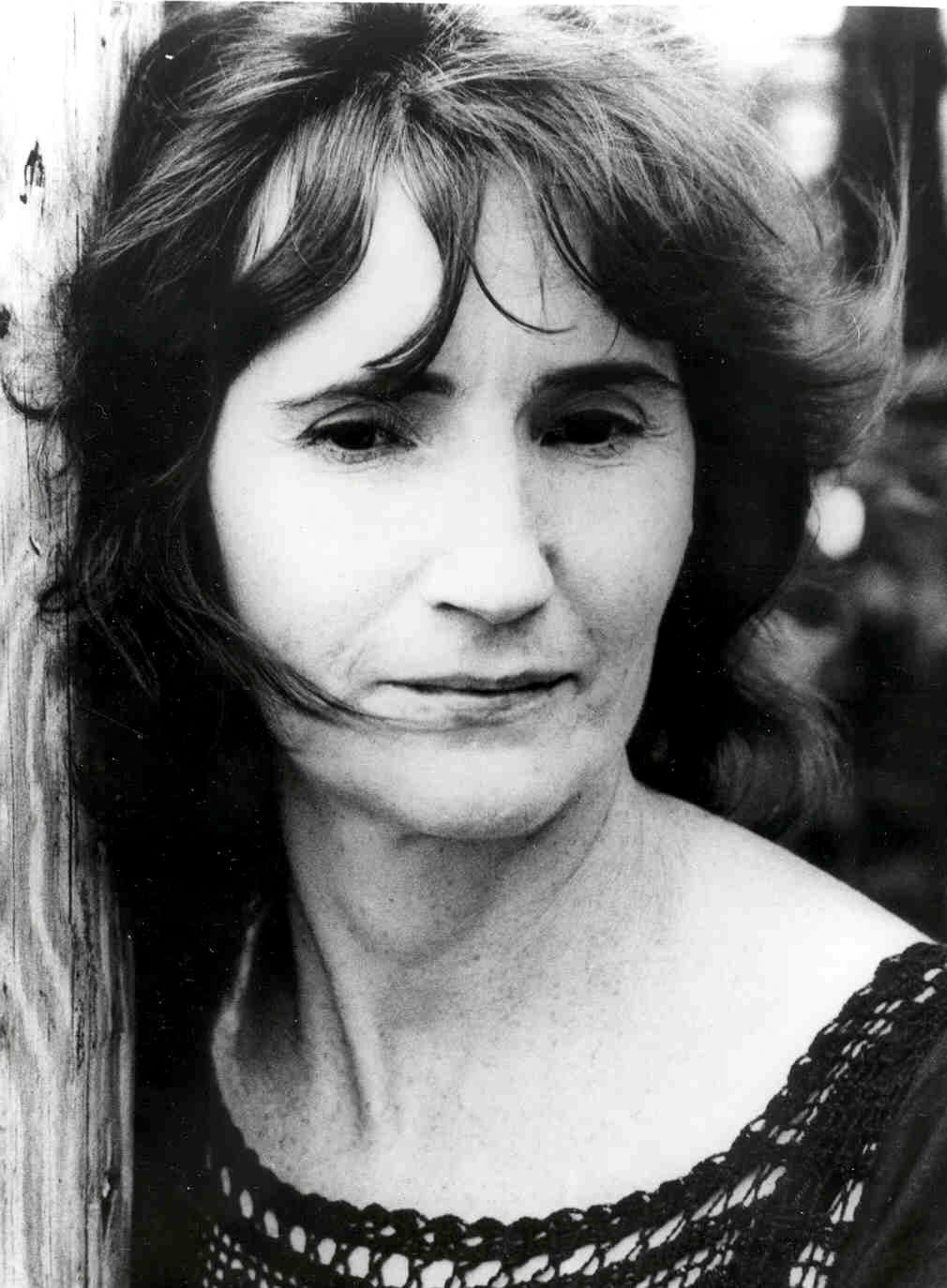
Dickens performed and recorded continuously through the 1980s and 1990s, sang at every IBMA awards ceremony she was asked to from the early 1990s onward, and was inducted into the IBMA’s Hall of Fame in 2017, six years after her April 22, 2011 death in Washington, D.C. The scholarly literature now treats her as one of the most important political voices in the music’s working history. The 2008 University of Illinois Press volume Working Girl Blues: The Life and Music of Hazel Dickens, co-written by Dickens and the historian Bill C. Malone, is a primary biographical source.
Coal Miner’s Daughter and the country crossover
Outside bluegrass, the same coal-and-Appalachian-poverty material was being absorbed into mainstream country in parallel. Loretta Lynn was born Loretta Webb in Butcher Hollow, Kentucky — about a hundred miles north of Hazel Dickens’s birthplace — in 1932. Her father worked the Consolidated Coal mines. Her 1970 single “Coal Miner’s Daughter,” and the bestselling 1976 autobiography and 1980 film of the same title, brought the Appalachian coal-family upbringing into the mainstream American consciousness in a way no previous country record had. Tom T. Hall’s “Trip to Hyden,” released in 1971 in the wake of the December 1970 Hurricane Creek mine disaster in Leslie County, Kentucky (which killed thirty-eight men), did the same documentary-ballad work in a country-radio idiom. John Prine’s “Paradise” (1971), written about the Peabody Coal Company’s strip-mining of his Muhlenberg County, Kentucky, ancestral land, sat on the same continuum and was covered widely — Johnny Cash, John Fogerty, Roy Acuff, John Denver, Dwight Yoakam, Sturgill Simpson, and the Country Gentlemen all recorded it.
The country crossover audience for this material was always larger than the bluegrass audience for it. The bluegrass material, though, kept the political register that mainstream country tended to soften. Dickens did not write love songs about coal mining. She wrote songs that named the companies, named the dead, named the strike-breakers, and named the years of organizing it had taken to get the union into the camp. Mainstream country generally would not.
Jean Ritchie, John Prine, and the 1970s
The 1970s brought two other major contributors to the coal-song canon, both working at the edge of bluegrass and country rather than inside either. Jean Ritchie, born December 8, 1922, in Viper, Kentucky, in Perry County — the youngest of fourteen children of Balis Ritchie, a Cumberland-Plateau farmer and dulcimer-tradition keeper — was a Fulbright-trained folklorist and singer who had been a central figure in the New York folk revival since the 1950s. Her later writing turned more directly to the coal country she had come from. “Black Waters” (1971) is a litany of the streams in eastern Kentucky that had been poisoned by mining runoff. “The L&N Don’t Stop Here Anymore” (1965) is, structurally, a love song to a coal railroad that had stopped working and to the world the railroad had supported. Both songs have been recorded since by Joan Baez, Kathy Mattea, Michelle Shocked, the Cox Family, and Dolly Parton.
John Prine, born in Maywood, Illinois, on October 10, 1946, was the grandson of a Muhlenberg County, Kentucky, coal-camp resident; the family had moved to suburban Chicago when the Paradise mining community where his grandparents had lived was strip-mined away by the Peabody Coal Company in the 1950s. Prine wrote “Paradise” for his grandfather and recorded it for his self-titled 1971 debut on Atlantic. The song has been widely covered across the country and bluegrass worlds — the Country Gentlemen, Roy Acuff, the Everly Brothers, John Denver, Dwight Yoakam, Sturgill Simpson, and many others have recorded it. Prine himself died of Covid complications on April 7, 2020, at seventy-three; his recorded catalog had grown across fifty years to over twenty studio albums and a generation’s worth of songwriting influence.
Steve Earle and The Mountain
Steve Earle’s 1999 record The Mountain — recorded with the Del McCoury Band as his backing group, his only full bluegrass record — was a thirteen-song meditation on Appalachia, mining, and what mountaintop-removal coal extraction was doing to the central-Appalachian landscape in the late 1990s. “The Mountain” itself is a first-person ballad in the voice of an old miner watching the mountain he grew up on get bulldozed flat. “Harlan Man,” “Carrie Brown,” “Texas Eagle” — the record’s songs were political and personal at once. The collaboration between Earle (a Texas country-rock songwriter with outlaw-country roots) and the Del McCoury Band (an institutional hard-traditional working bluegrass band) made the project work on terms neither artist’s solo work would have reached on its own.
Earle’s catalog has not stopped engaging with this material. Washington Square Serenade (2007), Townes (2009), I’ll Never Get Out of This World Alive (2011), and the rest of his post-2000 work have continued the line. His son Justin Townes Earle, who died of an overdose in August 2020, did similar work in a separate idiom before his death.
The contemporary scene
The current generation of bluegrass and country-adjacent musicians has continued to write coal-mining and coal-aftermath songs at a steady rate. Larry Sparks’s “Coalbed Memories,” Lonesome River Band’s “Carolina in the Fall,” Doyle Lawson’s various coal-camp gospel recordings, and the broader hard-traditional bluegrass scene continue to keep the material in current rotation. Patty Loveless’s two Mountain Soul records (2001 and 2009) contain her readings of “You’ll Never Leave Harlan Alive” (originally by Darrell Scott) and other coal-country material from her own Pikeville, Kentucky, family history. Kathy Mattea’s two coal-themed records — Coal (2008) and Calling Me Home (2012), both produced by Marty Stuart with bluegrass backing — pulled together the older repertoire (Hazel Dickens, Jean Ritchie, Si Kahn, Merle Travis) for a new audience.
Tyler Childers, born in Lawrence County, Kentucky, in 1991, has been the loudest contemporary voice on coal country and the central Appalachian landscape’s twenty-first-century condition. His 2017 record Purgatory (produced by Sturgill Simpson and David Ferguson) includes “Tattoos,” “Whitehouse Road,” and “Lady May” — songs about the post-coal Eastern Kentucky economy of methamphetamine, opioid addiction, and the working-class memory of mines that were no longer hiring. His 2019 Country Squire and 2020 Long Violent History (the latter a string-band record made in response to the Breonna Taylor killing in Louisville) extended the work.
The coal economy that produced the songs has, since the 1980s, contracted enormously. The central Appalachian coal industry employed about 130,000 people in 1980; it employs fewer than 20,000 today. The community-defining function the mines once served — for both their employees and the union and church and music institutions around them — has been hollowed out by automation, by competing natural gas, by the closing of every major Eastern Kentucky mine in the past fifteen years. What is left, in many of the communities Hazel Dickens and Tyler Childers and Loretta Lynn came from, is a depopulated landscape of older houses, opioid clinics, and a music tradition that is now, in its newer entries, often elegiac rather than working.
What the songs are for
The bluegrass and old-time mining canon has never been only a documentary tradition. The songs are not strictly memorials, though they have functioned as memorials. They are not strictly protest songs, though many of them have been used as protest songs. What they are, more accurately, is a continuous form of labor-and-place history written by the workers’ descendants, in the language and musical vocabulary the workers themselves used. Hazel Dickens singing “Black Lung” in 1973 about her own brother is the form working at its strongest. Tyler Childers in 2020 singing about an Eastern Kentucky landscape his grandparents would not recognize is the same form, working in a later phase of the same history.
That is, finally, why the music keeps producing these songs. The coal economy made the working-class culture that made the music. As long as the music’s audience remains tied, by genealogy or by sympathy, to the people who did that work, the songs will keep being written. And as long as Hazel Dickens’s recordings exist, the older songs will keep getting sung.