“Will the Circle Be Unbroken?” began as a gospel song published in 1907. Its words are by the English hymn writer Ada R. Habershon and its music by the American gospel composer Charles H. Gabriel, and Charles M. Alexander published it in Chicago. Habershon’s verses remember loved ones who have died and the hymns they taught in childhood. They picture the family’s seats emptied one by one and ask whether the family will be complete again, and the chorus asks whether a better home is waiting in the sky.
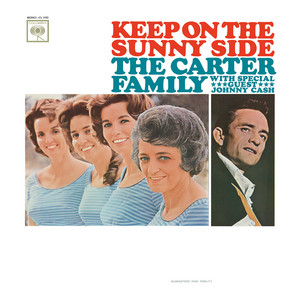
The song bluegrass and country singers know is A. P. Carter’s rework of it. The Carter Family recorded it on 6 May 1935 as “Can the Circle Be Unbroken?”, and Banner issued it backed with “Glory to the Lamb.” It was published that June as “Can the Circle Be Unbroken (By and By).” Carter kept the chorus with small changes and wrote new verses about a mother’s funeral. The singer watches from a window as the hearse comes to take her and begs the undertaker to drive slowly. He follows her to the grave, struggling to hide his grief, and comes home to a lonesome house full of crying brothers and sisters. The Carter Family recording entered the Grammy Hall of Fame in 1998.
Other versions followed quickly. Bill and Charlie Monroe recorded “Will the Circle Be Unbroken?” as the Monroe Brothers in Charlotte, North Carolina, on 12 October 1936, and Bluebird issued it in February 1937. Discographies credit their song to Zeke Morris, and it is a different version from the Carters’. Roy Acuff and His Smoky Mountain Boys recorded “Will the Circle Be Unbroken” in Saginaw, Texas, on 11 April 1940, and Vocalion issued it.
The Stanley Brothers recorded it at the King studio in Cincinnati on 1 April 1964, credited as an arrangement by the Brown’s Ferry Four, with Carter Stanley singing lead, Ralph Stanley tenor and George Shuffler bass. It was issued that July on Hymns of the Cross.
In August 1971 the Nitty Gritty Dirt Band recorded the three-record set Will the Circle Be Unbroken at Woodland Sound Studios in Nashville with country and bluegrass musicians of an older generation. United Artists released it in November 1972, and it reached No. 4 on Billboard’s country albums chart. On the title track, credited to A. P. Carter, Mother Maybelle Carter sang the first verse, Doc Watson and Jimmy Martin the second, and Roy Acuff the third. Earl Scruggs played banjo, Vassar Clements fiddle, Merle Travis and Jimmy Martin guitar, Pete “Oswald” Kirby dobro, and Junior Huskey bass.