“Swing Low, Sweet Chariot” was first printed in Jubilee Songs as Sung by the Jubilee Singers of Fisk University (New York: Biglow & Main, 1872). The Jubilee Singers were Fisk students, most of whom had been enslaved. Under George L. White, the school’s treasurer and music teacher, they left Nashville on 6 October 1871 to raise money for the university. The musician and editor Theodore Seward wrote the songs down from their singing for the collection.
Two stories compete for the song’s origin. The better-known one concerns Wallace Willis, an enslaved man who worked for the family of Allen Wright, a leading figure in the Choctaw Nation, near Doaksville in what is now Oklahoma. Before the Civil War, Willis and his wife Minerva also worked at the nearby Spencer Academy, a Choctaw school. An account published in 1914 says the couple sang plantation songs there that they had learned as children in Mississippi. In 1871 the academy’s former superintendent, the Rev. Alexander Reid, heard the Jubilee Singers in Newark, New Jersey, wrote down half a dozen of the couple’s songs, and spent a day rehearsing them with the group in Brooklyn. Among them were “Steal Away to Jesus” and “Swing Low.” Willis’s granddaughter Frances Banks said in a 1938 interview that he had made the song up himself. In 1915 John Wesley Work Jr. of Fisk told a different story, linking the song to the enslaved mother of Ella Sheppard, one of the original Jubilee Singers. Versions printed in 1873 by the Carolina Singers of the Fairfield Normal Institute in South Carolina, and in 1874 at the Hampton Institute in Virginia to a different melody, argue against any single author.
The chorus refers to the prophet Elijah, carried into heaven in a chariot of fire (2 Kings 2). In the first verse the singer looks across the Jordan and sees a company of angels coming to carry him home. Later verses admit to being sometimes up and sometimes down, and ask anyone who arrives first to tell his friends that he is on his way. The melody is pentatonic. A full chorus and a refrain line that recurs between verses let a soloist lead while a group answers.
The oldest known recording is an 1894 wax cylinder by the Standard Quartette. The Fisk Jubilee Quartet recorded a concert arrangement for Victor in Camden, New Jersey, on 1 December 1909 (Victor 16453), and Harry T. Burleigh published a setting for voice and piano in 1917.
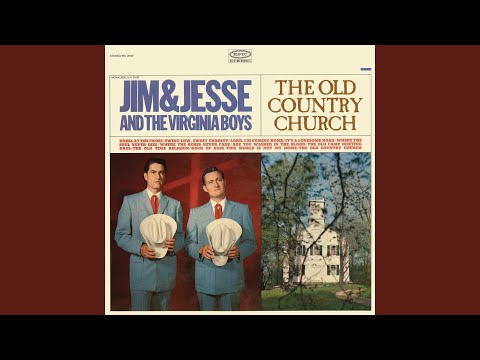
Bill Monroe recorded it on 5 March 1951 at Castle Studio in Nashville. He played mandolin and sang lead, with Grady Martin on electric guitar, Jimmy Selph on guitar, Tommy Jackson on fiddle, Ernie Newton on bass and Farris Coursey on drums. Decca issued it in June 1951 (Decca 46325), coupled with “Angels Rock Me to Sleep.” The Louvin Brothers included it on their Capitol album The Family Who Prays (1958). Jim & Jesse and the Virginia Boys recorded it on 20 April 1964 at Columbia Studio in Nashville for The Old Country Church (Epic, June 1964). The session had Jim McReynolds and Ray Edenton on guitars, Jesse McReynolds on mandolin, Allen Shelton on banjo, Jim Brock on fiddle and Lightnin’ Chance on bass. Epic also put the track on the B side of the single “Old Country Church” that August.