Musicians
- Lester Flatt — Lead Vocals, Guitar
- Louis Innis — Guitar
- John Ray "Curly" Seckler — Tenor Vocals, Mandolin
- Earl Scruggs — Baritone Vocals, Banjo
- Paul Warren — Fiddle
- English "Cousin Jake" Tullock — Bass
By:Lester Flatt, Earl Scruggs · Source Recording: The Bluegrass Album Band (1981*)Song details
Darling I have come to tell you
Though it almost breaks my heart
But before the morning darling
We'll be many miles apart
Don't this road look rough and rocky
Don't that sea look wide and deep
Don't my baby look the sweetest
When she's in my arms asleep
Can't you hear the night birds crying
Far across the deep blue sea
While of others you are thinking
Won't you sometimes think of me
One more kiss before I leave you
One more kiss before we part
You have caused me lots of trouble
Darling you have broke my heart
That’s your free listen. With an account the band keeps going — this song and every other one, as many times through as you like, in any key, at any tempo. Free for 14 days, no card.
Start my free 14 daysClicks before the band comes in, so you start together.
Raises the tempo as the band goes round, so you build up speed.
The band goes quiet for a bar or two and you keep the time going.
By:Lester Flatt, Earl Scruggs · Source Recording:The Bluegrass Album Band (1981*)
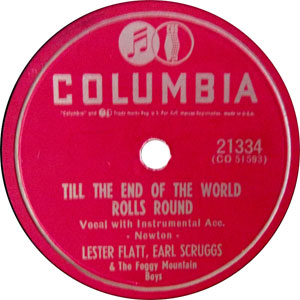
Lester Flatt and Earl Scruggs recorded “Don’t This Road Look Rough and Rocky” with the Foggy Mountain Boys on 19 May 1954, at Castle Studio in Nashville’s Tulane Hotel. The song carries their joint writing credit, and the session also produced “Till the End of the World Rolls Round” and the instrumental “Foggy Mountain Special.” Flatt sang lead, Curly Seckler the tenor and Scruggs the baritone. Seckler also played mandolin, with Paul Warren on fiddle, Louis Innis on second guitar and Jake Tullock on bass. Columbia released it in November 1954 as the B-side of “Till the End of the World Rolls Round.”
The song is a goodbye. The singer has come to tell a darling that “before the morning” they will be many miles apart. The chorus runs through three images: the rough and rocky road, the sea that looks wide and deep, and the “baby” who looks sweetest asleep in the singer’s arms. A later verse asks whether she can hear the night birds crying across the sea, and asks her to think of the singer sometimes while she is thinking of others. The last verse asks for one more kiss and then delivers the reproach: she has caused “lots of trouble” and broken the singer’s heart.
Hylo Brown recorded it for Starday in April 1962 under the title “Don’t That Road Look Rough and Rocky,” credited there as traditional. The Country Gentlemen played it on stage at the Folk Gallery club in Syracuse, New York, on 1 November 1964, with Charlie Waller singing lead, John Duffey tenor and Eddie Adcock baritone. Folkways issued that live recording in 1973 on Going Back to the Blue Ridge Mountains. Seckler recorded it again under his own name on Curly Seckler Sings Again (County, 1971), and the Blue Sky Boys, Bill and Earl Bolick, opened their 1976 Rounder album with it.
Scruggs went back to the song in 1982 on The Storyteller and the Banjoman, an album with Tom T. Hall for Columbia; their version was also the B-side of the single “There Ain’t No Country Music on This Jukebox.” The Bluegrass Album Band had recorded it in Berkeley, California, in October 1981 for The Bluegrass Album, Vol. 2 (Rounder, 1982), with the same three vocal parts as the original: Tony Rice lead, Doyle Lawson tenor and J.D. Crowe baritone. Jonathan Edwards and the Seldom Scene made it the opening track of Blue Ridge (Sugar Hill, 1985).
Please choose a song.
Clicks before the band comes in, so you start together.
Raises the tempo as the band goes round, so you build up speed.
The band goes quiet for a bar or two and you keep the time going.
Clicks before the band comes in, so you start together.
Raises the tempo as the band goes round, so you build up speed.
The band goes quiet for a bar or two and you keep the time going.
Loading chord chart…
Every song and every practice tool, free for 14 days. No card, nothing to cancel. Already have an account? Log in

Free for 14 days. No card needed.
Create an account and the whole thing is yours free for 14 days — every song in the catalog, every practice tool. No card needed.
Everything free for 14 days


Plus every chart in any key, playlists and printing.
Start my free 14 daysNo card, nothing to cancel.